Sleep Apnea
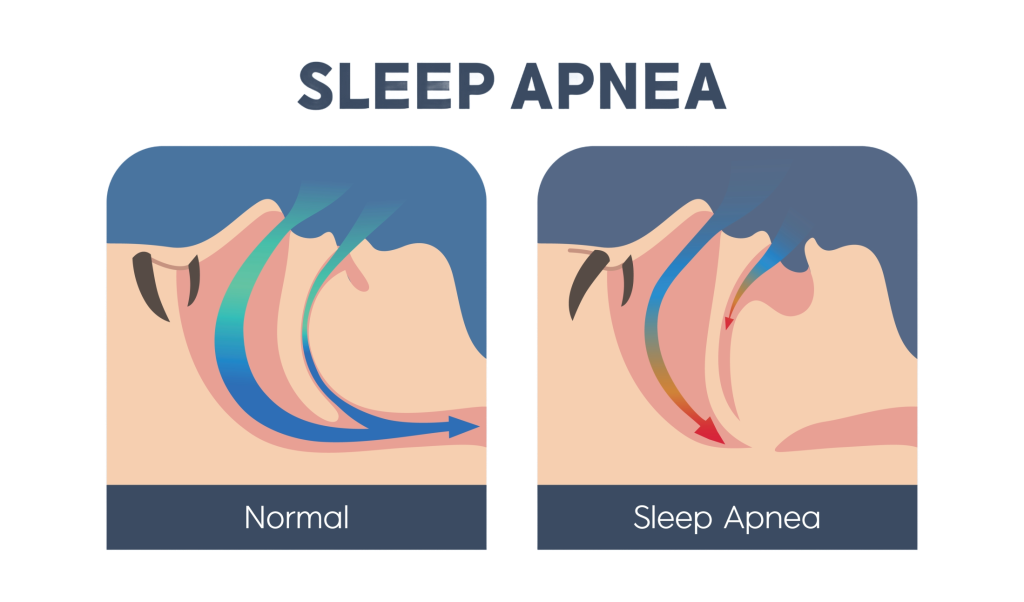
Obstructive Sleep Apnea (OSA) is a potentially serious medical condition characterized by brief interruptions of breathing while sleeping. OSA is caused when soft tissues in the back of the throat relax and block the passage of air. When breathing stops, blood oxygen levels drop, which increases blood pressure and strains every system in the body. These episodes make restorative sleep impossible. OSA can occur in children, seniors, or anyone at any age. The obstruction or narrowing of the airway results in repetitive arousals – signals from the body and brain that disrupts you out of sleep. The body intermittently fights to keep the airway open, eventually causing a chronic state of low-grade stress throughout the night. When the upper airway gets blocked or collapses, the body can’t get enough oxygen in the blood. The brain senses you can’t breathe and briefly wakes you so you can open the airway to start breathing again. People with OSA are often unaware of these episodes. In mild cases of OSA your breathing stops 5-15 times per hour throughout the night. In severe cases it happens 30 times or more per hour. According to the CDC, more than one-third of Americans are not getting enough sleep and an estimated 50 to 70 million Americans have chronic sleep-related disorders.
What is Obstructive Sleep Apnea?
*These declines in daytime function can result in higher rates of job-related and motor vehicle accidents.
What are the symptoms of Obstructive Sleep Apnea?
What factors increase the risk of having Obstructive Sleep Apnea?
Sleep apnea is a chronic and progressive condition. Over time, it is common for sleep apnea to slowly get worse. It is best treated as early as possible. If left untreated, sleep-related disorders may lead to significant adverse health consequences.
What happens if Obstructive Sleep Apnea is untreated?
A sleep test (polysomnography) can diagnose and confirm the severity of OSA. A polysomnogram records how many apneas, hypopneas, or respiratory effort-related arousals (RERA) occur per hour while a person is asleep. Dr. Malan’s office can refer you to get a sleep study test from the comfort of your own home.
How do I know if I have Obstructive Sleep Apnea?
Although there is no cure for OSA, there are several effective treatments. The severity of OSA determines which treatment is best. OSA is classified as either mild, moderate or severe. A custom made mandibular advancement device can adjust the jaw forward opening the upper airway. Dr. Malan is trained to provide oral appliance treatment. This is a cost effective, non invasive treatment. Severe OSA: The most common treatment for severe OSA is continuous positive airway pressure (CPAP) therapy. A CPAP device has a mask that is worn over the nose and mouth during sleep. The mask is connected by a hose to a small machine that pumps pressurized air through the hose and mask to open your airway. If this effective treatment does not work for you, oral appliance therapy can help alleviate symptoms and decrease the number of apneas throughout the night. Surgical Procedures: Removal of tonsils or adenoids Surgery to modify the structure of mouth or nose Surgery to implant a device that stimulates the tongue to move forward Lifestyle changes are also often encouraged as a form of treatment. Losing weight, sleeping on your side rather than on your back, and not drinking alcohol before bed can all be beneficial. If vitamin D or B deficiencies are a health problem it is wise to eat a healthy diet and take supplements as needed. While ongoing treatment usually alleviates symptoms, stopping treatment will cause the condition to come back. OSA is a serious medical condition that needs careful attention and treatment. Most major medical plans offer coverage for diagnosis and treatment.
How is Obstructive Sleep Apnea treated?